



The Water Tower
The Water Tower in Užice
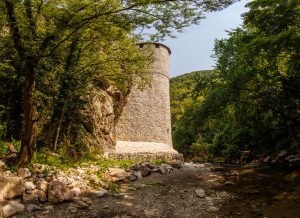 The Water Tower is part of the medieval Old Town fortress in Užice, built on a high rocky outcrop above the Đetinja River. Located in an exceptionally strategic position and surrounded by steep cliffs on three sides, the fortress controlled the Đetinja valley and the routes passing through this part of western Serbia for centuries.
 The Old Town is mentioned in written sources dating back to the Middle Ages, and its history is closely linked to the noble Vojinović family. In the second half of the 14th century, the fortress was ruled by Nikola Altomanović, one of the most powerful Serbian noblemen of the time. Following a conflict with Prince Lazar Hrebeljanović and the Bosnian Ban Tvrtko I, Altomanović was defeated in Užice in 1373, after which the fortress changed hands several times over the following centuries.
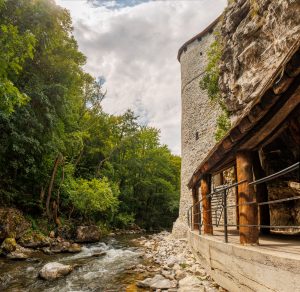
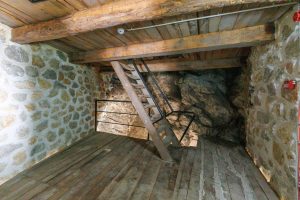
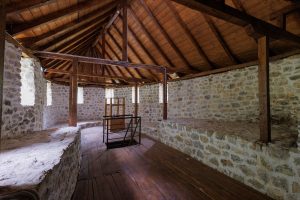
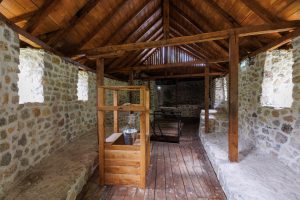
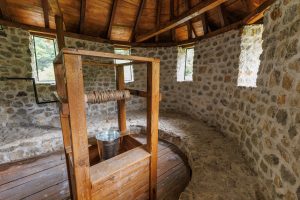
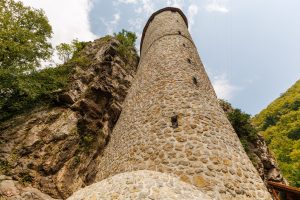 One of the most fascinating parts of the fortification was the Water Tower, built in the 15th century to provide the inhabitants and defenders of the fortress with secure access to water. Its distinctive feature was that it connected the fortress on the rock with the Đetinja riverbed. This made it possible to supply the fortress with water even during a siege, without having to venture beyond its defensive walls.
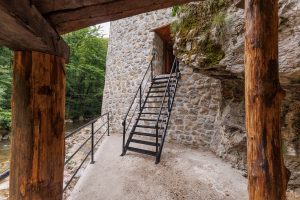 According to historical records, the Water Tower had eight levels and stood approximately 43 metres high, with 168 steps leading down to the river. At its base was an access point to the Đetinja, from where water was drawn using a winch. This architectural and defensive solution is considered unique among medieval fortifications in Serbia and demonstrates the importance of securing a reliable water supply for the defence of the town.
 The Užice fortress consisted of three sections adapted to the configuration of the rocky terrain. The citadel with the main tower stood at the highest point, with the Middle Town below it, while the Lower Town descended towards the Đetinja River. The Water Tower was located in this lowest section of the complex, serving as a physical connection between the fortress and the river.
 The Old Town retained an important military role until the 19th century. After Serbia gained greater autonomy and the Ottoman army withdrew from the Užice fortress, the fortifications were mined and largely destroyed in 1863. The Water Tower was also severely damaged. Its remaining sections survived for several more decades, until they were further destroyed by the swollen Đetinja River in 1910. Only traces of the once monumental structure remained, bearing witness to its former position and appearance.
Restoration Project
 During the 20th and early 21st centuries, the Old Town became the subject of archaeological research, conservation work and gradual restoration. The revitalisation of the fortress has been carried out in several phases, with the aim of preserving its historical and architectural value and creating the conditions for the complex to become one of Užice’s most important tourist and cultural landmarks.
 A particularly important step in this process was the reconstruction of the Water Tower at the medieval Old Town fortress. The project was financed through the EU PRO Plus programme, implemented by the European Union in cooperation with the Ministry of European Integration and carried out by UNOPS, with significant participation from the City of Užice. The grant agreement for the project was signed on 2 November 2023, while construction works began in 2024. The reconstruction also represents a continuation of long-term efforts to revitalise the Old Town, based on a detailed regulation plan whose development had previously been supported by the European Union through the EU PRO programme.
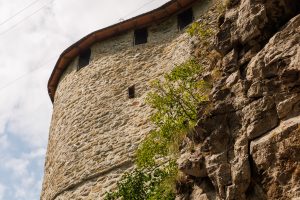 The reconstruction involved rebuilding the stone water intake tower based on historical records and depictions of its original appearance. A particular challenge was the fact that the tower’s foundations are located directly in the Đetinja riverbed, requiring complex construction work and special care to preserve the authenticity of the site. Authentic stone was also used in the reconstruction, under the professional supervision of the competent Institute for the Protection of Cultural Monuments in Kraljevo.
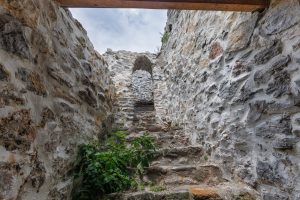 The total value of the project was EUR 831,797, of which the European Union provided EUR 346,698 through the EU PRO Plus programme, while the City of Užice contributed EUR 485,099. Work on the Water Tower was completed in 2026, bringing one of the most recognisable elements of Užice’s Old Town back into full view after more than a century.
The restoration of the Water Tower has further enhanced Užice’s tourism and cultural offer, allowing visitors to gain a more complete understanding of the appearance and function of the medieval fortress. The project represents an important contribution to the preservation of cultural heritage and the continued revitalisation of the Old Town as one of the most significant historical monuments in western Serbia.